It’s 6:47 AM Tuesday. My laptop is closed. Coffee is hot. The dog is unimpressed.
Three things have already happened without me.
A morning briefing landed in Slack at 6:30 — HubSpot deal motion overnight, Gong signal from yesterday’s calls, calendar conflicts I need to know about before lunch. My mentee’s pre-session prep doc finished generating around 6:15; Mentee A gets an hour of my time on Tuesdays and the prep used to eat a Monday evening. And at 4:02 AM Eastern, a deal-advancement alert fired because someone in the Belkins pipeline went quiet for too long and the system noticed before I did.
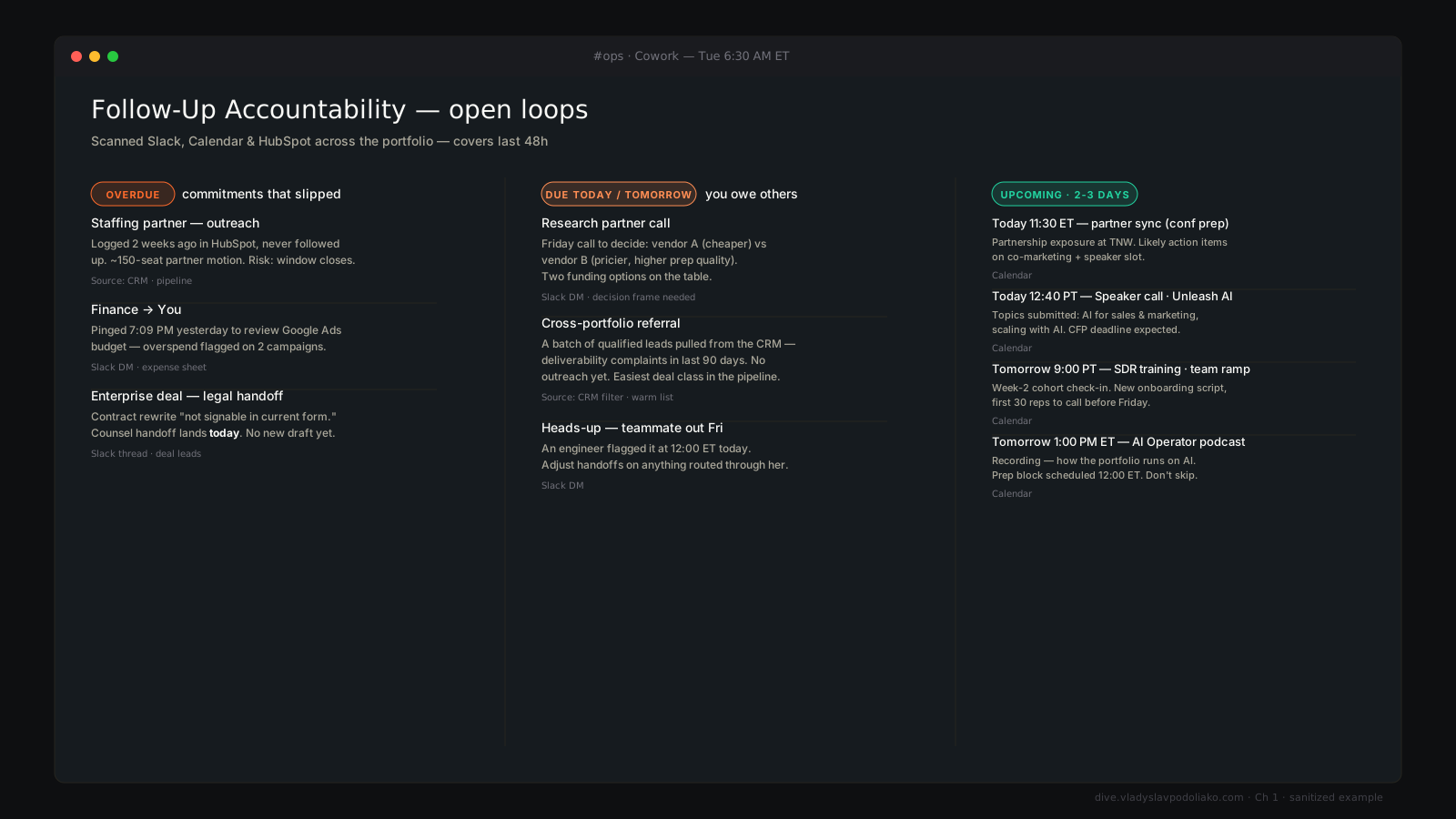
Three instances. Three workflows. Three Slack pings sitting in a single channel called #ops. I read them with my coffee. By 7:00 AM I know what the day looks like. I know which deal needs a nudge, which mentee needs which pushback, and which thing my leadership team will ask me about first.
I do not open Gmail. I do not open HubSpot. I do not open Slack as twelve workspace tabs across a portfolio of companies. I open one window:
That’s the entire morning. That’s the chapter.
AI didn’t make me faster. AI killed my tabs.
The before#
Eighteen months ago this same morning would’ve looked like a punishment.
Open Gmail. Open HubSpot. Open Slack — three workspaces because Belkins, Folderly, and another portfolio company each have their own. Open Notion. Open Calendar. Open Sentry. Open Stripe. Open Ahrefs because I want to know if Folderly moved on a keyword. Open ChatGPT to summarize the inbox I just half-read. Open Linear because someone shipped something I should know about. Ten tabs, twenty minutes, no decisions yet. Just gathering. Just walking the glass tunnel between my own tools, copying numbers in my head, forgetting half of them by the time I get to the next pane.
I run a portfolio of companies including Belkins and Folderly, and we crossed 100 SaaS tools years ago. That’s not a flex. That’s a tax. Every tool is a login, a context switch, a separate version of “truth,” and a permission I forgot to revoke.
The “first 20 minutes of email” trap, multiplied. Three quarters of a year of mornings and you’ve burned a senior engineer’s salary on context-switching. Nobody puts that line item on a P&L. It’s distributed across every Tuesday of every operator on the planet.
The personal chief of staff#
Here’s the framing that lands for most operators after they’ve lived inside the morning for a week. The agent isn’t a tool. It isn’t a chatbot. It isn’t even a workflow. It’s a personal chief of staff — the role every founder I know has tried and failed to hire because the job is impossibly specific, the salary is impossibly high, and the half-life of “they get me” is impossibly short. A chief of staff reads your calendar, your inbox, your deals, your direct reports, and writes you the morning version of the world that you can act on by 7 AM. That’s the job. The new thing is that the role is now ambient. It runs on tokens, not on salary. It doesn’t quit when its kid gets sick. It doesn’t get political when the COO does something it disagrees with. It does the job and disappears until tomorrow.
The question most people ask AI is “will it replace me.” That’s the wrong question. The right question is whether you’ll let it upgrade you. The executives who get this first will have an unfair advantage — not because their model is better than yours, but because they’re using it to become better operators. Better at noticing. Better at moving. Better at protecting the few hours a day where real decisions get made. Pick the system in your life that drains you most and put the chief of staff on it first. The morning is the obvious one. The Friday wrap is the second one. Then everything downstream of those two starts to feel quieter, faster, less yours to drag around.
What changed (the boring word that runs everything)#
One assistant that can read all my systems and tell me the story. That’s it. That’s the unlock.
The protocol that makes it possible is called
So when I say “Claude, what do I need to know today?” — there’s no magic. The model has a list of tools. It picks the right ones. It calls hubspot.search_deals, slack.read_channel, gong.get_meeting_summary, stripe.list_payment_intents. It synthesizes. It writes back to me. The thing that used to be ten tabs and twenty minutes is one prompt and forty seconds.
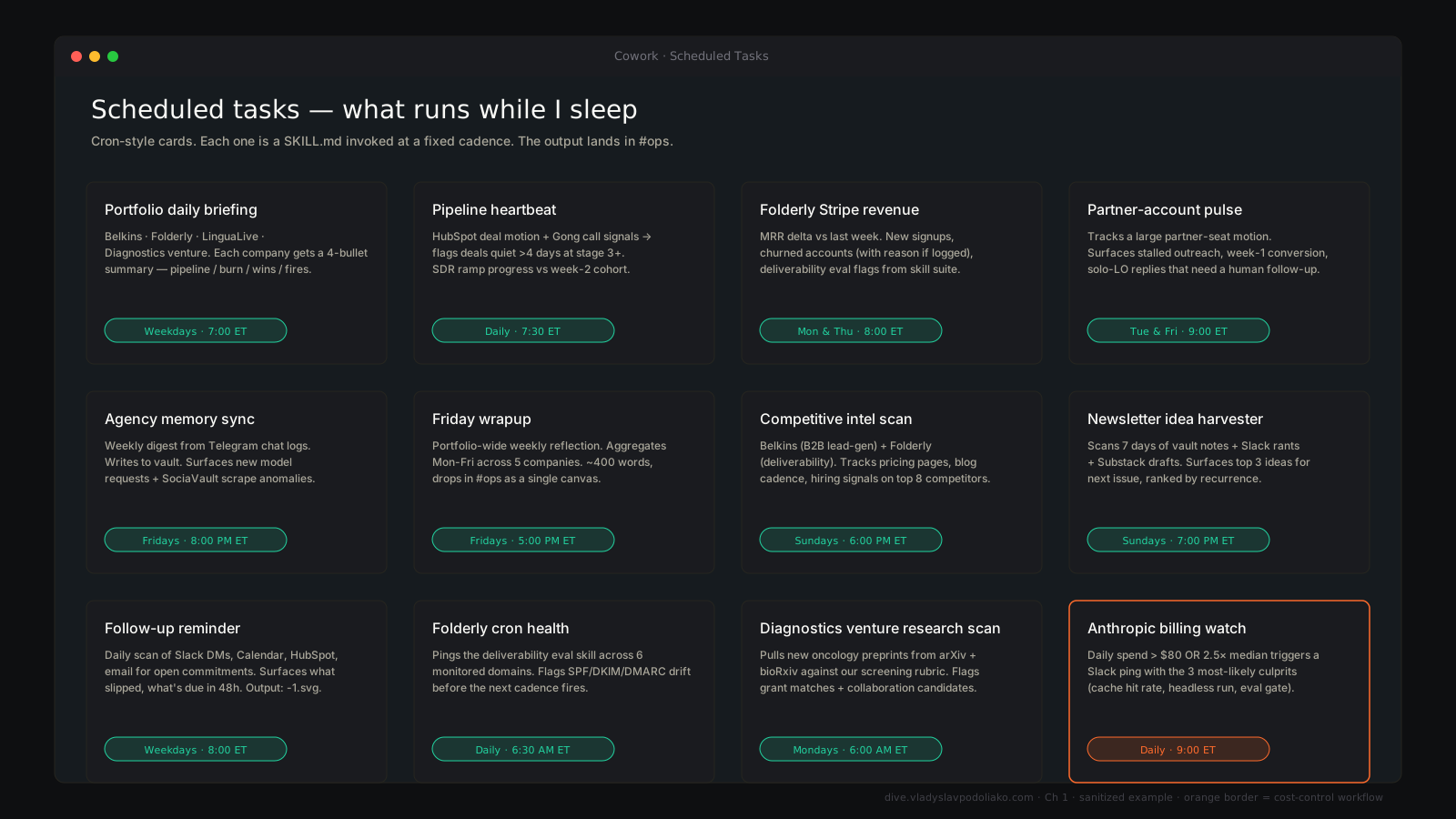
I have roughly twenty MCP servers wired into a single surface. HubSpot, Stripe, Slack, Gmail, Calendar, Notion, Ahrefs, Customer.io, Drive, Vercel, Klaviyo, Fireflies, Intercom, Pendo, Linear, Atlassian, Hex, Amplitude, ElevenLabs. The point isn’t the count. It’s what it collapses to. The agent walks the tunnel for me. I stay in the room where decisions actually get made.
The reframe most operators miss#
Most people think the win is “AI does my work.” It isn’t. The win is upstream of that.
The win is: AI deletes my context-switching.
You don’t ride the same horse faster. You stop riding entirely and the horse delivers things to your office. The work doesn’t get done quicker because I prompt better; the work I used to do — the gathering, the cross-referencing, the squinting between tabs — stops being work I touch at all. It happens in the background, on a schedule, by a worker I don’t have to manage, and it lands as a finished artifact in the one channel I actually read.
Think of it like a kitchen brigade. The chef doesn’t chop onions faster. The chef stops chopping onions. A line cook does it. The chef tastes, decides, plates. That’s the move. The AI is the line cook. You are not promoted. Your job description changed.
Friday, 5 PM, no human required#
Last Friday at 5 PM, a
Now: the work happens whether I’m working or not.
What this actually means#
“Stop using AI like a chatbot. Start using it like an OS.” Five sentences on what that means, because the line is too clean to leave undefined.
A chatbot is a thing you visit. An OS is a thing you live inside. A chatbot answers when you ask. An OS runs scheduled jobs, holds memory across sessions, dispatches workers, and writes to durable storage on your behalf. A chatbot has one window. An OS has windows, daemons, and
I burn between 3 and 10 billion
The deal#
Three things this book promises, and I’ll be specific because corporate sign-offs are how courses get returned.
First, by the end you’ll have one or two surfaces, not fifty. The portfolio I described — HubSpot, Stripe, Ahrefs, the long list — collapses into Cowork or
Second, the work that used to pull you in will start pushing itself to you. Morning briefings. Friday wraps. Deal-advancement alerts at 4 AM. Mentee prep that finishes overnight. The pattern is the same — a small worker, a clear job, a durable output channel. You stop hunting for context. Context arrives.
Third, the thing you do alone today will run as a small
That’s the deal. The tabs die. The workers wake up. You go back to making decisions instead of gathering paperwork to make them.
Turn the page.